The World Was Never Flat Travel Literature in Medieval Islam
Date: December 9, 2024
Time: 17:00
Venue: Garanti Cultural Centre, Uçaksavar Campus

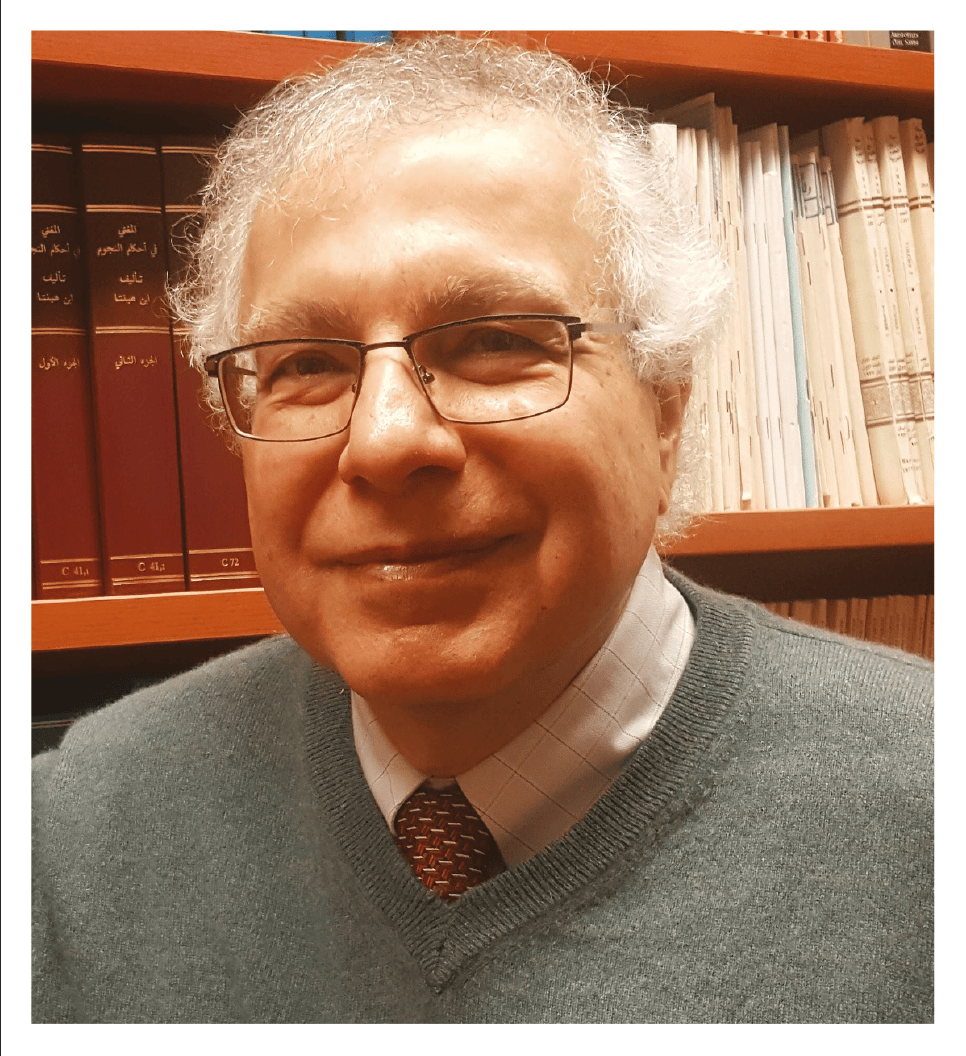
F. Jamil Ragep, born in West Virginia (USA), is an Emeritus Professor at McGill University, Montreal, Canada. He graduated from the University of Michigan with degrees in Anthropology and Near Eastern Studies and later earned a Ph.D. in the History of Science at Harvard University. From 1990 to 2006, he was a professor in the Department of the History of Science at the University of Oklahoma, after which he joined the Institute of Islamic Studies at McGill, where he held a Canada Research Chair from 2006 to 2020. Ragep has written extensively on the history of science in Islam and has co-edited works on the transmission of science between cultures and on water resources in the Middle East. In collaboration with the Max Planck Institute for the History of Science in Berlin and later with Medeniyet University (Istanbul), Ragep has overseen an ongoing international effort to catalogue all Islamic manuscripts in the exact sciences and provide a means to access information online on the intellectual, institutional, and scientific contexts of these texts (Islamic Scientific Manuscripts Initiative [ISMI]). His most recent works deal with the Islamic background to Copernicus, a Persian astronomical treatise by Naṣīr al-Dīn al-Ṭūsī, the philosophy of Quṭb al-Dīn al-Shīrāzī, and the reception of ʿAlī Qūshjī's radical astronomical program.
The World Was Never Flat Travel Literature in Medieval Islam
Date: December 9, 2024
Time: 17:00
Venue: Garanti Cultural Centre, Uçaksavar Campus
Tales of Transmission: Scientific Exchanges in the Pre-Modern Period
Date: Friday, November 15
Time: 14:30
Venue: Rectorate Conference Hall
Global and Regional Challenges in the Middle East
Date: Friday, June 7
Time: 10:00 AM
Venue: Rectorate Conference Hall
Ortadoğu’da Küresel ve Bölgesel Meydan Okumalar
Tarih: 7 Haziran Cuma
The last quarter century of globalization has witnessed the largest reshuffle of global incomes since the Industrial revolution. The main factor behind the "reshuffle" was the rise of China, and to a slightly lesser extent, of all Asia.
The event we will hold with Branko Milanović, the new guest of Boğaziçi Lectures, will be on December 3, 2020 at 18:00. Click to register for the ev
Why do we tell and engage with (listen, read, watch, play) stories compulsively? In our world of usually unsparing evolutionary competition, good information matters for organisms of every kind.
The World Was Never Flat Travel Literature in Medieval Islam
Date: December 9, 2024
Time: 17:00
Venue: Garanti Cultural Centre, Uçaksavar Campus
Tales of Transmission: Scientific Exchanges in the Pre-Modern Period
Date: Friday, November 15
Time: 14:30
Venue: Rectorate Conference Hall
Global and Regional Challenges in the Middle East
Date: Friday, June 7
Time: 10:00 AM
Venue: Rectorate Conference Hall
Ortadoğu’da Küresel ve Bölgesel Meydan Okumalar
Tarih: 7 Haziran Cuma
Saat: 10:00
Yer: Rektörlük Konferans Salonu
The last quarter century of globalization has witnessed the largest reshuffle of global incomes since the Industrial revolution. The main factor behind the "reshuffle" was the rise of China, and to a slightly lesser extent, of all Asia.
The event we will hold with Branko Milanović, the new guest of Boğaziçi Lectures, will be on December 3, 2020 at 18:00. Click to register for the event to be held on zoom.
--
Why do we tell and engage with (listen, read, watch, play) stories compulsively? In our world of usually unsparing evolutionary competition, good information matters for organisms of every kind.
